01
Safety and public order
Prevention, visible presence, and the capacity to restore order during festivals, large gatherings and unforeseen events — without treating every crowd as a threat.
Three decades of service in the Indian Police Service, across investigation, economic offences, intelligence, anti-corruption and the command of a metropolitan police force.
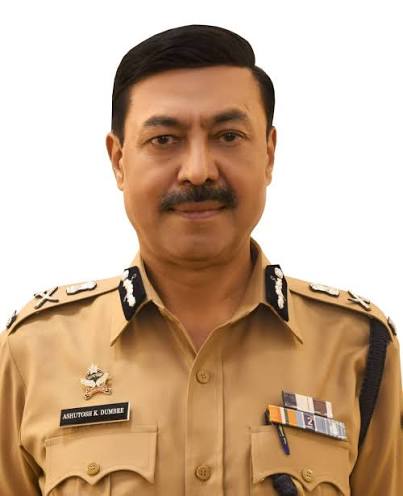
Ashutosh Dumbare is an officer of the Indian Police Service, appointed to the 1994 batch of the Maharashtra cadre, and serves as Commissioner of Police, Thane.
His career has moved through the parts of policing that rarely resemble one another. Economic offences ask for patience with documents and financial trails. Intelligence asks for judgement about what an incomplete picture actually means. Anti-corruption work asks for procedural discipline inside public institutions. Command of a city police force asks for all of it at once, in public, and at short notice.
Public records place him in senior positions across those dimensions: Deputy Commissioner and later Additional Commissioner of Police in Thane; Joint Commissioner of Police in Thane in 2016; Joint Commissioner of Police for Crime and the Economic Offences Wing in Mumbai; Additional Director General of Police at the Anti-Corruption Bureau; and Commissioner of the State Intelligence Department from September 2020. In December 2023 the Government of Maharashtra appointed him Commissioner of Police, Thane.
In 2021 he was awarded the President’s Police Medal for Distinguished Service, an honour conferred by the Government of India and announced in the Independence Day list of police medals. The official record names him as Ashutosh Karbhari Dumbare, then Additional Director General of Police and Commissioner, State Intelligence Department, Maharashtra.
What follows on this website is an account of that work — the responsibilities it carried, the institutions it ran through, and the reasons those responsibilities matter to the people a police force serves. Everything stated here is drawn from published public records. Where a detail could not be verified, it has been left out rather than filled in.
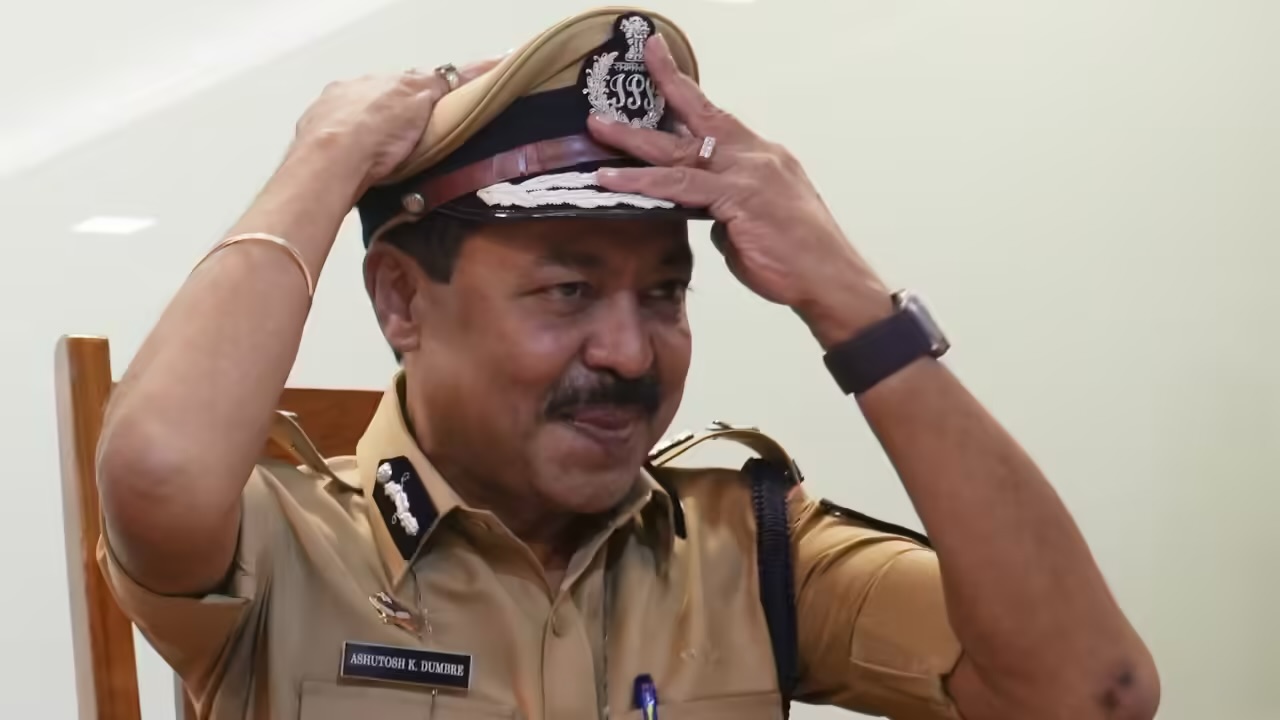
A metropolitan police force is asked to hold several obligations in balance at the same time, every day, in public view.
None of these obligations can be optimised alone. A decision that makes a road move faster can affect how safe it feels after dark. A response that restores order quickly can affect whether people believe they will be treated fairly next time. Urban policing is the continuous work of holding those trade-offs steady.
01
Prevention, visible presence, and the capacity to restore order during festivals, large gatherings and unforeseen events — without treating every crowd as a threat.
02
Traffic, transport corridors and dense residential settlement make policing a question of logistics as much as law: where officers are, how quickly they arrive, and what they can reach on foot.
03
Commercial districts, industrial estates and financial activity bring their own categories of crime, which are documentary and digital far more often than they are physical.
04
Lawful procedure, restraint in the use of authority and accessible complaint mechanisms are what convert a police force’s legal powers into public confidence.
01
Entry into the Indian Police Service on the Maharashtra cadre. The early years of an IPS career are spent in field and district policing, where an officer learns the work at the level at which citizens actually meet it.
02
Successive senior appointments in the Thane commissionerate — Deputy Commissioner, then Additional Commissioner, and Joint Commissioner of Police in 2016 — covering law and order and crime in a fast-growing urban district.
03
Joint Commissioner of Police for Crime and for the Economic Offences Wing in Mumbai — supervisory responsibility for investigation in India’s largest commercial city.
04
Senior command in the state agency responsible for investigating corruption in public office — work that depends on evidence, procedure and institutional independence.
05
Commissioner of the State Intelligence Department, Maharashtra — the assessment and coordination function that supports decisions taken elsewhere in the state’s administration.
06
Appointed Commissioner of Police, Thane, by the Government of Maharashtra in December 2023 — command of one of the state’s major metropolitan commissionerates.
A police institution is experienced by citizens through ordinary interactions — not through its organisational chart.
Most people encounter a police force at a counter, on a phone line, at a barricade or in a corridor. Those encounters are brief and unremarkable, and they are where confidence in the institution is actually built or lost. A person who reports a theft, asks for a permission, or wants to know what happened to a complaint is forming a judgement about the whole organisation from a single exchange.
That is why senior leadership in policing is largely about the conditions under which those exchanges take place: whether officers are reachable, whether procedures are explained, whether records can be traced, and whether people are treated with the same courtesy regardless of who they are.