Information
Lawful collection of information relevant to public order, safety and the security of the state.
A great deal of police work produces no visible event. Information is gathered lawfully, assessed, and passed to the people who have to decide something. Financial records are reconstructed over months. Complaints against public officials are examined under a statutory process. None of this looks like policing as it is usually depicted.
This section explains those functions as institutions — what they exist to do, why they require a different investigative skill set, and how they connect to the rest of the justice system. It describes no operational methods, procedures or capabilities.
A state intelligence organisation exists to reduce the amount of surprise in public administration. It collects information within the law, evaluates its reliability, places it in context, and provides an assessment to the authorities responsible for acting. Its product is judgement: what a situation appears to be, how confident that reading is, and what could change it.
That work is institutional rather than dramatic. It involves reading the pattern of routine reporting, understanding local conditions, recognising when several small indications add up to something, and being explicit about uncertainty. An assessment that overstates its confidence is more dangerous than one that admits what it does not know.
Ashutosh Dumbare served as Commissioner of the State Intelligence Department, Maharashtra, from September 2020, and held that appointment when the President’s Police Medal for Distinguished Service was announced in 2021.
Lawful collection of information relevant to public order, safety and the security of the state.
Testing reliability, cross-checking against what is already known, and separating fact from inference.
A stated judgement, with its confidence level and the conditions that would change it.
Ensuring the assessment reaches the units and agencies that need it, in time to be useful.
Identifying developments early enough that a measured response remains possible.
Maintaining a standing picture of vulnerabilities so resources are allocated deliberately.
Nothing on this website describes operational methods, sources, procedures, capabilities or any other sensitive detail of intelligence or investigative work. That information is not public, and it is not appropriate material for a public profile. What is presented here is the institutional purpose of these functions, written from published, general knowledge of how they operate.
An Economic Offences Wing investigates fraud, criminal breach of trust, forgery, cheating and offences involving companies, deposits, securities and financial instruments. There is usually no scene to examine and no physical trace to recover. The offence exists in records: agreements, invoices, bank statements, board resolutions, registrations, ledgers and the movement of money between accounts and entities.
The investigative task is reconstruction. An investigator has to establish what was represented, what actually happened, where the money went, who controlled the decisions, and at what point conduct crossed from commercial failure into criminal intent. That last distinction is the hardest and the most important: not every loss is a crime.
Ashutosh Dumbare served as Joint Commissioner of Police for Crime and for the Economic Offences Wing in Mumbai. No individual case is attributed to him on this website; the description below is of the discipline itself.
An Anti-Corruption Bureau investigates offences by public servants under the Prevention of Corruption Act. Its purpose is not punitive display. It is to maintain the expectation that a public office cannot be used for private advantage without consequence — an expectation that shapes conduct far more widely than any individual case.
The work is unusually procedural, and deliberately so. Complaints have to be verified. Evidence has to be gathered in a manner that will withstand examination. Statutory sanction is required before prosecution of a public servant. Each of these requirements slows the process, and each exists to protect against the misuse of the process itself — because an anti-corruption agency that can be directed at individuals is a more serious problem than the conduct it investigates.
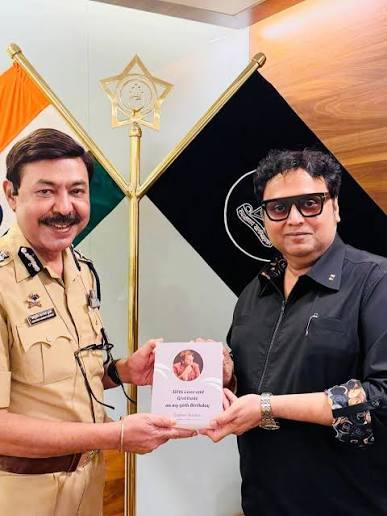
Ashutosh Dumbare held the rank of Additional Director General of Police at the Anti-Corruption Bureau. This website makes no allegation about any individual or institution, and does not discuss unproven claims of any kind.
The working assumption that public decisions are made on their merits, which is what makes ordinary administration possible.
Verified material gathered under a defined statutory process, not inference or reputation.
The same standard applied irrespective of the seniority of the office involved.
The outcome the function ultimately serves — trust that institutions work as they are supposed to.
The next section records the President’s Police Medal for Distinguished Service awarded in 2021, the documented professional milestones of this career, and the public sources on which this website relies.